
It’s the new year, and I am overwhelmed with an urgency to keep at the work I do every day: keeping people informed about the tiniest things that can make a huge difference in their pets’ behavior.
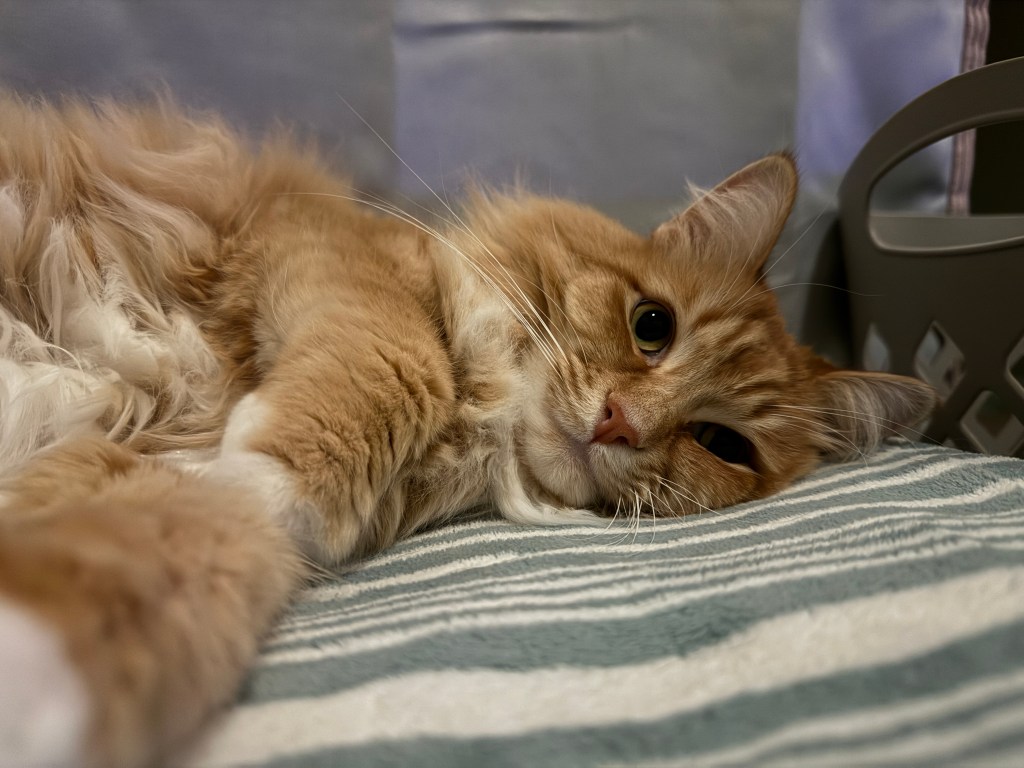
So here I am after doing a nail trim on my three resident cats. One of them came from a history of being treated like a toy as a kitten, so he can be understandably crabby about any kind of handling. We’ve worked really hard together to make sure that what needs to be done will be clear (I need to feel your fur for mats) while allowing him to opt out at any time without escalating into swatting, hissing, or attempted bites. We rarely reach that stage in his care, but mostly it’s because of a few things:
-Mini sessions, frequently. I understand the human instinct to pencil in brushing or nail trimming, and wanting to do it in one large go. It is especially stressful when they are really due for this (hello talon nails), and then the pet gets overwhelmed and wants to stop. That stress for us can push us to *just keep going* to get it all done right this moment, when we have decided it’s time, and subsequently, we create a new fear or aversion to care in general. A way to avoid that is to practice in small spurts, every couple of days. Less pressure, less stress…for all involved.
-pairing handling & care with FOOD. We really need to stop withholding food from our pets as a society. I say to clients all the time, “Would you go to work this week if your boss said that this week was unpaid?”…you wouldn’t. When we get “paid” to participate, we are more likely to participate. We start to think of the event as something good because of the outcome. Trim a nail, give a treat. It’s not hard, and you can even just give them some extra of their normal food (especially in the case of special diet or health issues). BUT, be careful that we are not trying to bait with food for participation…more on that in a future blog.
-watch for behavior change, and do an *extra* session if you think something is up. This is the bread and butter of this post and the whole reason I sat down at my keyboard just now. The one cat I referred to above, who is sensitive to handling, happens to have 3-4 inches of fur all over his body. He has long hair and is mega prone to mats depending on how and where he sleeps and rests throughout the day. He usually starts to become less tolerant of my other two cats trying to play with him when he is starting to get those. We did a quick nail check on everyone today, and my intention was to then move to check his fur for mats. Instead, I found a split nail with some kind of fabric/string stuck in the nail! OUCH! I was able to trim back the nail, trim the hair around the nail, and gently remove the string, which was likely causing discomfort. With a couple more days or weeks…this nail may have become infected, leading to an even bigger problem (and bigger problem behaviors).
Our animals are talking to us all the time through their mannerisms, body posture, daily routines, and interactions. If we took just a tiny bit of time to pay attention to their “baseline,” we could catch when things are off so much sooner. Something as simple as a split nail with a string could’ve led to weeks of breaking up cat squabbles and eventually a vet visit or call to a trainer (if I weren’t one) while feeling lost or hopeless. Doing short, daily checks of their physical health can help us catch things quicker, too.
Cheers, pet guardians.
Jacqueline Drake, BSc CDBC FFCP
Animal Behavior Consultant & Researcher
 Training by Jacqueline, LLC
Leave a comment